
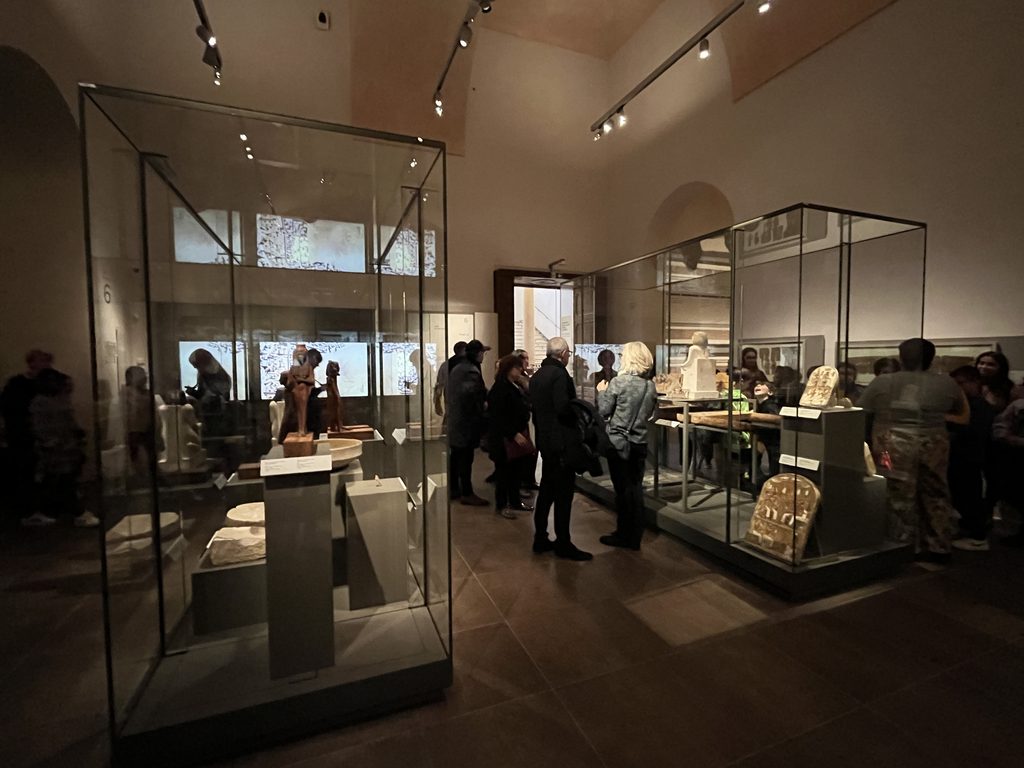
When the European Museum Academy first presented the transformative nature of cultural heritage as the central theoretical construction in META-MUSEUM thinking, we received a very interesting comment from students in museum education and museum professionals. They wondered if it was at all acceptable for museums to consciously try to influence their visitors. That led to interesting and stimulating discussions with reflections around the formal and official definition of museums from the International Council of Museums (ICOM), as well as public expectations and confidence.
This summer we hosted summer schools again and met engaged young students in museum education from around the world. They presented us with yet another challenging question: the students questioned respect for the personal integrity of museum visitors in light of the META-MUSEUM idea to continuously collect personally sensitive data about visitors. The purpose is, of course, to use data on how visitors engage with a museum exhibition to improve the facilitation of the experience for all visitors. We want to make the exhibition experience more efficient and thereby maximize its potential impact. But all the same, we need personal data to achieve that. We explained that the data would be anonymized and deleted after use, but that did not stop the intellectual and emotional protests from students. As one student said, “As visitors, we expect the museum to be a safe place, practically out of reach for authorities.” Museums are expected to be safe places where visitors are at a safe distance from interference by authorities or the public sphere as such—very much like religious houses past and present. As I understand the students, they point to a perception of a museum visit as entering another world, thereby in some aspects leaving the “real” world. The visitor is thus full of expectations and curious, but may also be vulnerable in the sense that they are entering unknown territory. Museums must meet the needs of their visitors in all aspects.
It is great to meet international students in museum education from the Erasmus Mundus Master’s in Education in Museums and Heritage. They represent the next generation of museum professionals and are fundamentally open to new ideas, while remaining critical of any action that minimises or undermines their perception of what museums are about. They are still in that valuable and unique position between being engaged museum users and professionals. Their reactions and reflections are immensely valuable for the META-MUSEUM project and for any initiative to enhance museum qualities. We need to take their reactions very seriously; it would be a big mistake to ignore them.
Visitors have great trust in museums, and that trust may be undermined if museums—even with the very best intentions—consciously try to influence (manipulate) them or collect sensitive personal data (intimidate), as museums are perceived as “safe places.” We need to keep this in mind as part of the complex ingredients shaping the sphere of confidence that forms the foundation of why museums exist in the first place.
Henrik Zipsane